
Constant read-write noise, a buzzing fan, and freezing are all symptoms of a slow hard drive. A big, fast, hard drive is a must for any modern PC. The hard drive acts as the primary storage unit for all of your data. Further, your productivity hinges on the speed with which you can retrieve your files and access your programs. Each new generation of PCs offers bigger hard drives. However, an oversized, cluttered drive is just a bigger, slower drive. Nevertheless, you can easily maintain the quality of your hard drive and learn how to avoid experiencing slow hard drive problems.
Special note: One of the easiest ways to clean up your hard drive’s clutter is to use a registry cleaner. Click here to learn more!
STEP #1: Scan Your Hard Drive
One of the major causes of a slow hard drive is errors. Some hard drives errors can be caused by the bumping your PC. This can actually cause physical damage to the hard drive. The damage is known as a bad sector. A very slow hard drive is usually the result of this phenomenon. Bad sector cause your hard drive to constantly try to read inaccessible information. Running Check Disk will help you determine if your hard drives has bad sectors.
- Click the Windows button and open the Computer folder.
- Find and Select your hard drive, right click the hard drive icon.
- Choose Properties from the drop down list.
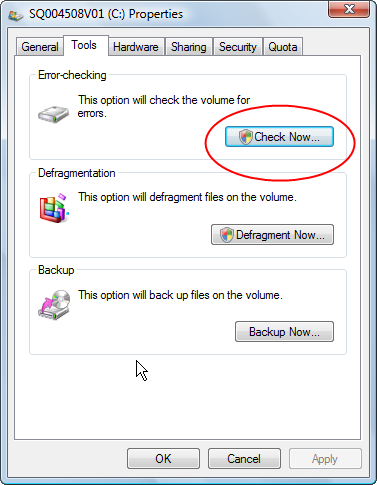
- In the Local Disk Properties dialog box, click the Tools tab.
- Click the Check Now button.
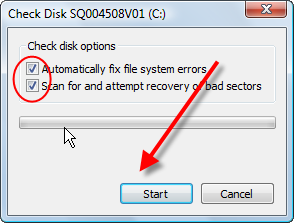
- For maximum cleanup click “Automatically fix…” and “Scan for …”
- If you see new dialog window, click Schedule disk check to start.
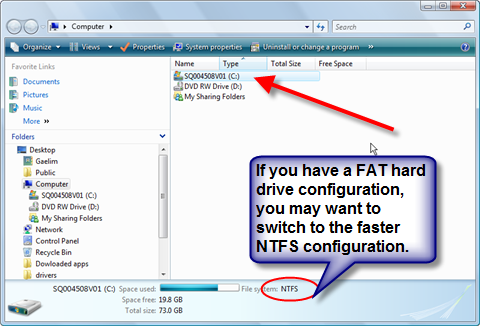
Switch FAT to NTFS— You can increase your hard drive speed by switching FAT to NTFS. The NTFS configurations provides increased security, file–by–file compression, quotas, and even encryption. The default setting for XP may be set to FAT which is slower system. However if you have Vista converted to the NTFS16 or NTFS32. Older hard disk also may suffer from PIO mode. You may be able to switch your settings to DMA which is a faster protocal. To learn more about PIO/DMA Modes, visit Microsoft Help Page
Unfortunately, current Windows version don’t pack in a Registry Cleaner to check errors in your registry you have to hunt and seek them manually if you don’t have a cleaner.
STEP #2: Clean Up Your Hard Drive
Each file on your computer is stored in more than one place. A slow hard drive has useless and abandoned files stored in multiple places on your computer. This is similar to having a very messy room. When you are in a rush and need to find your keys. It will take forever to find them. Same goes for finding files in your hard drive.
- Click the Windows button and open the Computer folder.
- Find and Select your hard drive, right click the hard drive icon.
- Choose Properties from the drop down list.
- In the Local Disk Properties dialog box, click the Disk Cleanup tab.
- Choose Files from all users on this computer.
- Click OK after the check box for all the files you want to delete.
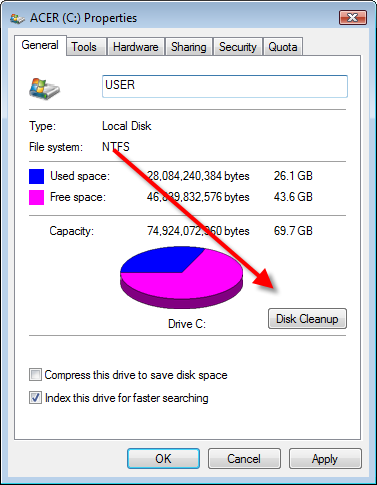
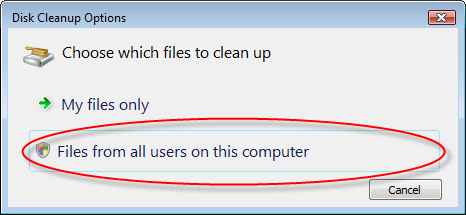
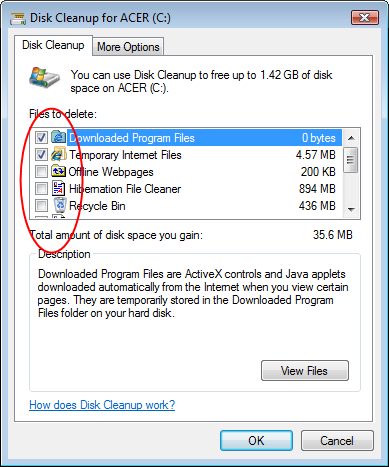
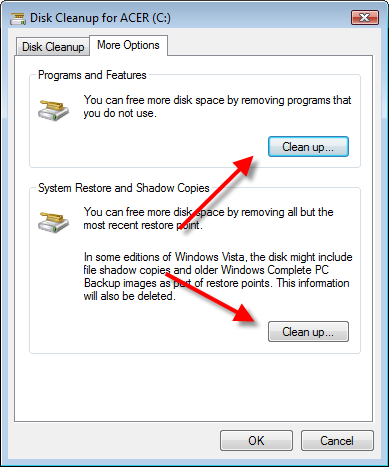
Choosing More Options will give you the chance clean up your slow hard drive from programs and shadow copies. Note that shadow copies are used as system of back up that can save your files once deleted. This makes data recovery easier but causes slow hard drive problems. So, proceed with caution.
The Registry is your hard drives largest filing system. Any errors or corrupted files can cause everything from hard drive problems to sluggish startup and shutdowns. Slow hard drive problems occur because the CPU will constantly access the hard drive for information that has to be immediately delivered. If the registry is fragmented and unorganized your CPU will stall and your hard drive constantly cycles through your registry system.
STEP #3: Defragment Your Hard Drives
- Open the Start Menu
- Click on Computer
- Right Click your hard drive icon.
- Scroll down to the Properties.
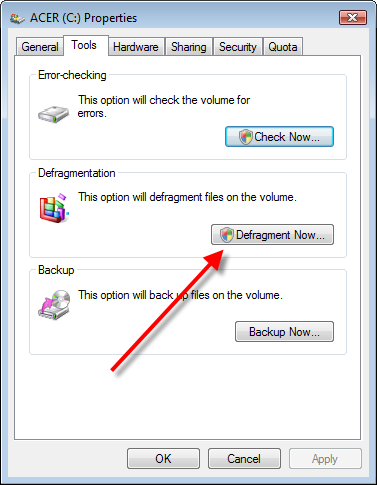
- In the Properties Menus, Open the Tools menu.
- Choose Defragment Now.
- In the Disk Deframenter menu. Click on Defragment
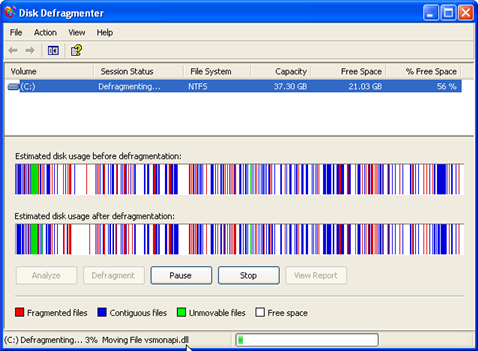
The image displays a hard drive with a large amount of fragmented data. This is demonstrated by the collection of broken bars. Each color indicates different data fields, files, and blocks of data. In “healthy” computer, one with little fragmentation, the disk defragmenter would display a collection of large continuous blocks consisting of one color.
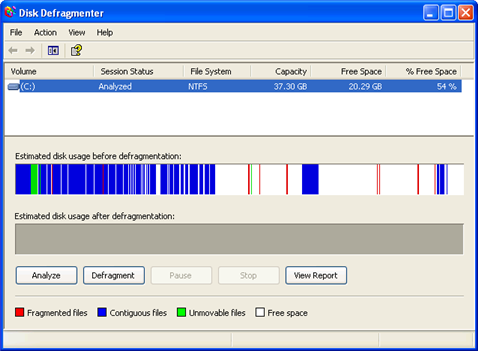
The result of the defragmentation process demonstrates a collection of large contiguous colors fields. This is an indication that large amounts of similar data have been group in specific locations on the hard drives thus making the data easily accessible and eliminating one of the major causes of fragmented hard drive syndrome.
For more tips to improve your PC, click here
STEP #4: Enable Write-Caching
One of the features that you can find in Windows 7 and Vista is called Write-Caching. This allows your hard drive to work at high performance by allow information to be written in a temporary fast storage cache before its written on your hard drive. It takes time to write info to your hard drive but the temporary cache hold it until later. This is a high performance measure which puts speed before safety because if your system suddenly shuts off you may lose the data in the temporary cache. Here is how to enable write caching. If you need a visuals step by step, click here
- Click Start
- Right Click Computer and Choose Manage and Choose Device Manager. Or Simply type Device Manager in to your Windows Search Bar
- In the device manager, click Disk Drives and choose your hard drive.
- Right Click and Choose Properties
- Click the Policies tab, under Policies, choose enable write caching on device.
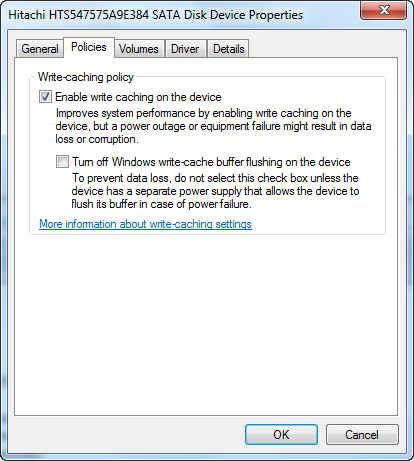
This is an easy to use high performance tweak that gives your hard disk performance a extra boost .There are many reasons why you have a slow hard drive.
Video Tip: Enable High Performance Mode
To learn more about speed up a slow hard drive with a registry cleaner, Click here.